How to Reduce Cat Allergens at Home: 7 Proven Strategies
Learn how to significantly reduce Fel d 1 cat allergens at home. Follow our step-by-step cleaning, filtration, and grooming routines to live comfortably with cats.
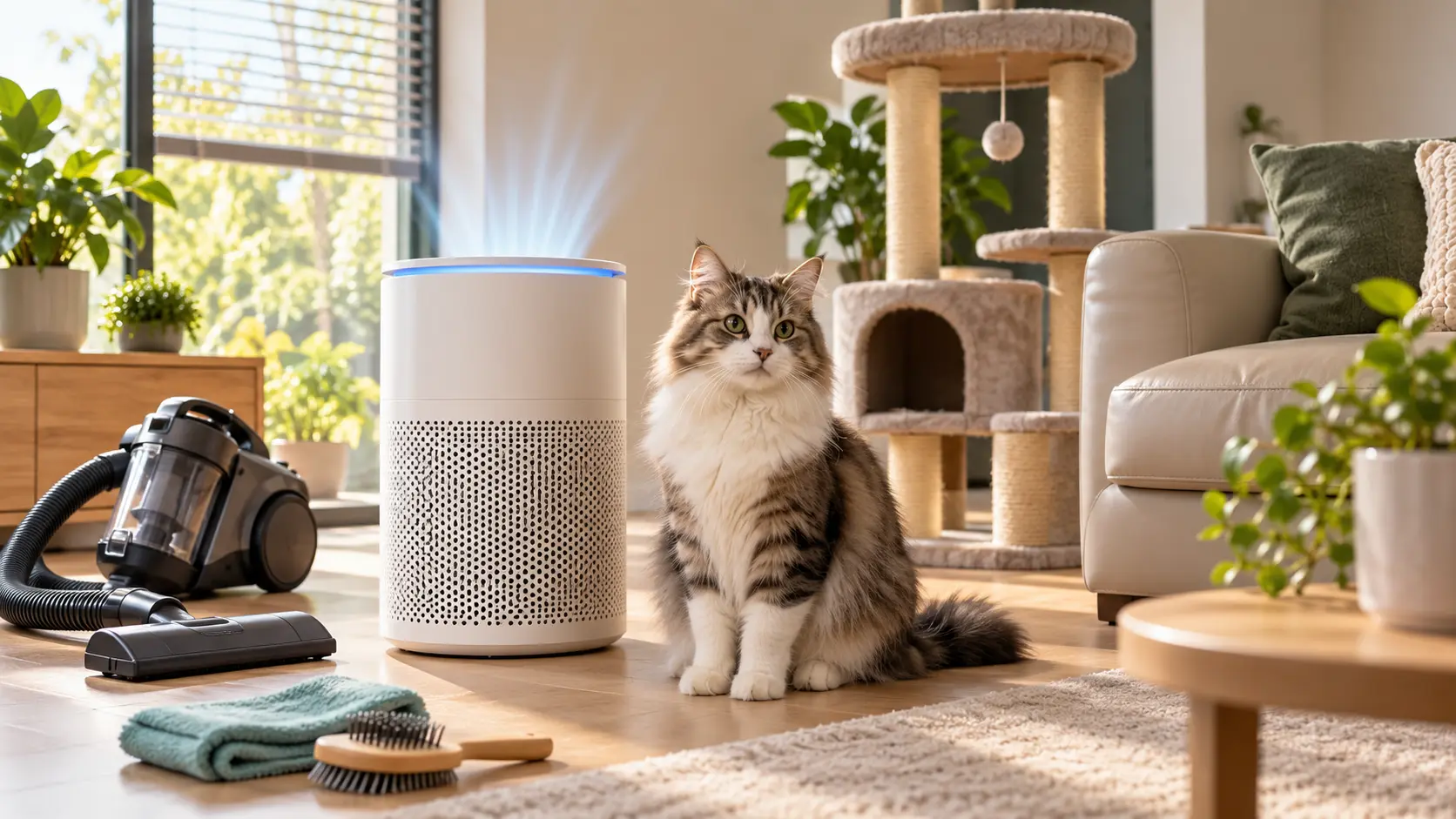
Living with cat allergies doesn't mean you have to rehome your beloved feline companion or suffer through constant sneezing, watery eyes, and nasal congestion.
Because feline allergens—specifically the lightweight Fel d 1 protein—are microscopic and sticky, they can remain suspended in household air for hours and settle into carpets, curtains, and upholstered furniture. However, by establishing a structured, multi-layered management routine, you can drastically lower the allergen density in your home.
Here are 7 scientifically backed strategies to effectively reduce cat dander and allergens in your living space.
Quick Action Plan: High-Impact Allergen Controls
| Management Strategy | Primary Mechanism | Allergen Reduction Impact | Difficulty Level |
|---|---|---|---|
| Purina LiveClear Diet | Neutralizes active salivary Fel d 1 in the mouth | High (Up to 47% reduction) | Easy |
| True HEPA Air Filtration | Captures microscopic airborne dander particles | High (Continuous purification) | Easy |
| Bedroom Sanctuary Zone | Prevents nocturnal exposure to concentrated dander | Very High | Moderate |
| Targeted HEPA Vacuuming | Removes trapped dander from rugs & soft fibers | Moderate to High | Moderate |
| Hard Surface Conversion | Eliminates fiber reservoirs that trap dander | Very High (Long-term) | High |
1. Neutralize Fel d 1 at the Source (Dietary Control)
The most effective way to handle cat dander is to reduce protein potency before it ever leaves your cat's mouth.
As covered in our breakdown of what causes cat allergies, cats transfer salivary Fel d 1 onto their coat during daily grooming. Modern nutritional breakthroughs now allow pet owners to neutralize this protein safely.
Feeding your cat an egg-protein-coated diet (such as Purina Pro Plan LiveClear) binds to active Fel d 1 in their saliva as they eat, rendering the protein harmless before it dries into airborne dander.
2. Establish a Strict "Bedroom Sanctuary Zone"
We spend roughly one-third of our lives sleeping. Keeping your bedroom completely free of cat allergens allows your immune system to rest and recover overnight, significantly decreasing daytime symptom severity.
- Keep Doors Closed 24/7: Do not allow your cat inside the bedroom at any time—even when you are not in the room.
- Encase Mattress & Pillows: Install allergy-proof, micro-porous zippered encasings around mattresses and box springs to block trapped dander from rising.
- Wash Bedding in Hot Water: Wash sheets, pillowcases, and blankets weekly in water that is at least 130°F (54.4°C) to break down protein bonds.
3. Deploy Continuous True HEPA Air Filtration
Microscopic cat dander particles measure between 1 and 10 microns, making them lightweight enough to stay airborne for extended periods. Standard HVAC filters cannot trap particles this small.
Place a standalone True HEPA air purifier in high-traffic areas and inside the master bedroom. True HEPA filtration captures 99.97% of airborne particles down to 0.3 microns, pulling floating dander out of your breathing zone before it settles into soft surfaces.
4. Implement a Strategic Vacuuming & Cleaning Schedule
Dry sweeping or using standard vacuum cleaners can actually worsen your symptoms by blowing tiny dander particles back into the air through exhaust vents.
- Use a Sealed HEPA Vacuum: Ensure your vacuum features a completely sealed system alongside a certified HEPA exhaust filter so captured dander remains trapped inside the canister.
- Vacuum High-Traffic Rugs Twice Weekly: Slow, deliberate passes over carpeted areas prevent deep-set protein buildup.
- Damp Wipe Hard Surfaces: Use microfiber cloths lightly dampened with water or electrostatic sprays to trap settled dust and dander rather than dusting with dry feather dusters.
5. Minimize Fabric and Fiber "Allergen Reservoirs"
Soft textiles act like giant sponges for pet dander. Transitioning your living space toward non-porous materials drastically reduces ambient allergen loads.
- Replace Wall-to-Wall Carpet: Where possible, swap carpets for hardwood, tile, laminate, or vinyl flooring.
- Choose Leather or Vinyl Upholstery: Opt for leather or smooth faux-leather furniture instead of plush fabric couches, as they can be easily wiped clean with a damp cloth.
- Swap Heavy Curtains for Blinds: Replace thick fabric drapes with washable roller shades or wood/metal blinds.
6. Adopt Safe Feline Grooming Practices
Regular grooming removes loose fur and dander before it spreads through your home, but it should be done carefully to prevent triggering an immediate allergic reaction.
- Groom Outdoors or in Well-Ventilated Areas: Always brush your cat outside or near an open window so loose dander disperses outdoors.
- Delegate Grooming Duties: If possible, have a non-allergic family member or professional groomer handle weekly brushing.
- Use Dander-Reducing Wipes: If your cat tolerates baths poorly, wiping their coat down twice a week with damp microfiber cloths or specialized pet dander wipes reduces loose surface proteins without stressing your pet.
7. Pair Home Controls with Medical Therapy
Even with a immaculate cleaning routine, ambient exposure in public or at friends' homes can still cause flare-ups. Maintaining a baseline medical plan keeps your physical cat allergy symptoms under control.
Work with your physician to select non-drowsy second-generation oral antihistamines, corticosteroid nasal sprays, or anti-allergy eye drops for daily maintenance. If you are seeking a long-term cure, ask an allergist about allergen immunotherapy (allergy shots or sublingual drops) to gradually desensitize your immune system.
Frequently Asked Questions
How long does cat dander stay in a house after a cat leaves?
Because cat dander is lightweight and sticky, Fel d 1 proteins can persist in carpets, walls, and ductwork for 4 to 6 months after a cat is removed from a home unless deep environmental remediation occurs.
Does bathing a cat reduce allergies?
Yes, but the effects are temporary. Bathing a cat with warm water reduces airborne dander levels for roughly 24 to 48 hours, but allergen production returns to baseline levels within a week.
Can air purifiers completely remove cat allergies?
Air purifiers significantly reduce airborne dander concentrations, but they cannot clean dander that has already settled deep into carpets and fabric furniture. They work best when combined with sealed HEPA vacuuming and hard-surface cleaning.
Final Summary
Controlling cat allergens requires a layered defense system:
- Neutralize salivary Fel d 1 at the source using anti-allergen cat food.
- Filter airborne dander continuously with True HEPA air purifiers.
- Protect your sleeping space by maintaining a strict bedroom sanctuary.
- Remove trapped surface allergens using a sealed HEPA vacuum and damp microfiber cloths.
For an in-depth look at medical diagnosis and personalized treatments, read our guide to cat allergy testing and diagnosis.