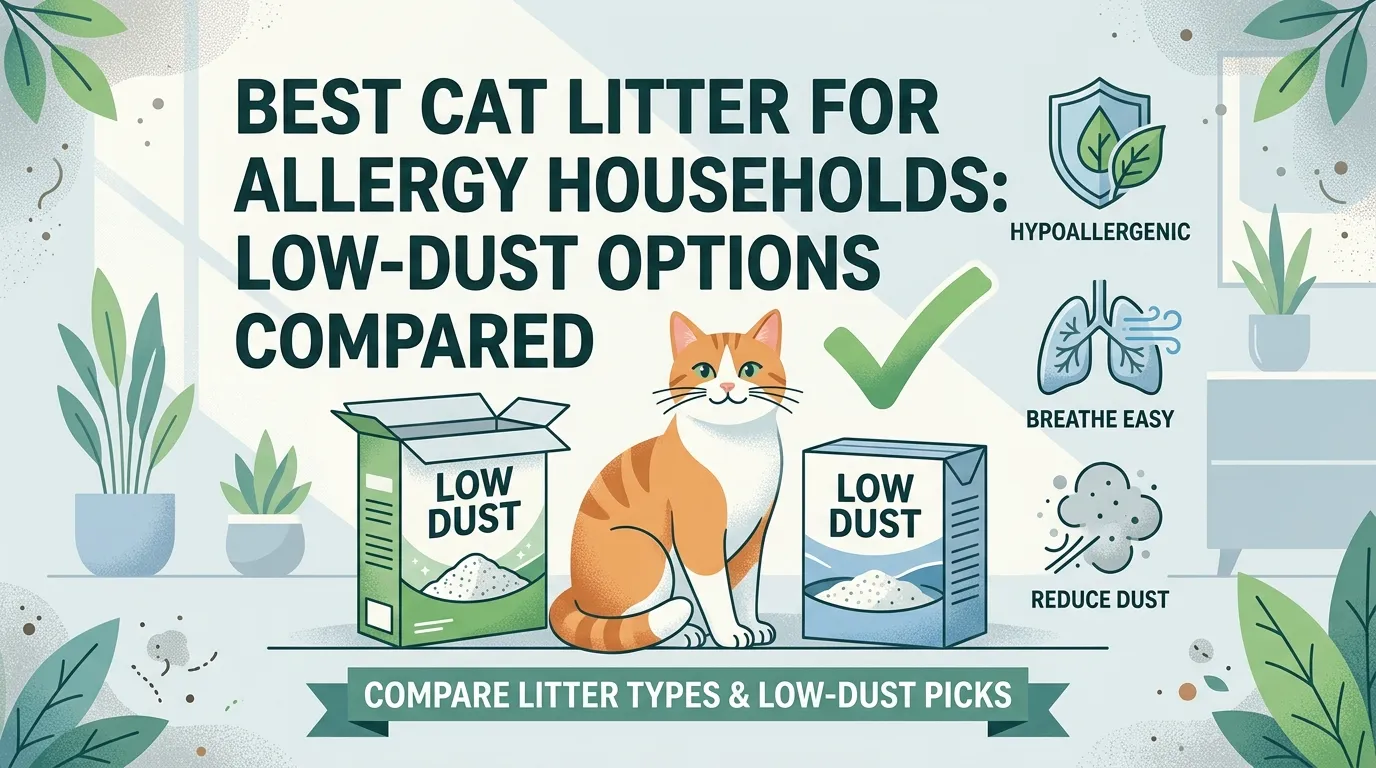
Best Cat Litter for Allergy Households: Low-Dust Options Compared
Dusty litter can aggravate sensitive airways. Compare litter types, what to look for, and low-dust picks for allergy households.
If you are searching for the best low dust cat litter for allergies, the direct answer is that daily scooping habits, box ventilation, and pouring technique matter far more than any single brand name. While switching to a low-dust substrate significantly reduces airborne particulate irritation, no commercial litter eliminates airborne cat allergens on its own. Managing litter-related reactions requires pairing an unscented, minimal-dust medium with sensible household hygiene.
For households managing asthma, chronic rhinitis, or feline sensitivities, the litter box is often a hidden hotspot. Every time a cat scratches or an owner pours fresh substrate, clouds of microscopic mineral or plant dust rise into the breathing zone. When inhaled, these fine particles irritate delicate mucosal tissues and carry dried feline proteins deeper into the lungs.
In this guide, we evaluate the primary litter substrates available today, outline what allergy sufferers should look for, compare low-dust options, and provide actionable maintenance protocols to keep your air clear.
The Intersection of Cat Allergies and Litter Dust
To manage litter-related symptoms effectively, it helps to distinguish between true immune reactions and mechanical airway irritation.
As detailed in our medical foundation on what causes cat allergies, true feline allergies are triggered primarily by Fel d 1, a microscopic 35 kDa secretoglobin protein produced in feline saliva, sebaceous skin glands, and anal glands. However, cats also excrete secondary proteins, including albumin and Fel d 4, in their urine.
When a cat uses the litter box:
- Urinary Protein Transfer: Dried urine bonds to tiny litter particles.
- Grooming Contamination: Salivary Fel d 1 transfers from the cat's paws onto the litter granules during covering.
- Mechanical Aerosolization: As the cat digs or as you vigorously shake the scoop, fine mineral fragments and organic dust particles measure between 2 and 10 microns in diameter. These particles launch into the air, remaining suspended for hours while carrying attached dried proteins directly into your respiratory tract.
For an allergic person, inhaling dusty litter produces an inflammatory "double strike": physical irritation of the mucous membranes combined with biological allergen exposure.
What Allergy Households Should Look For in Cat Litter
Selecting the right substrate requires balancing human respiratory safety with feline behavioral acceptance. When shopping for low-allergen options, focus on the following criteria based on manufacturer specs and published ratings:
1. Minimal Dust Output (Screened vs. Unscreened)
Look for litters explicitly marketed as 99% or 99.9% dust-free that undergo dedicated de-dusting screening during manufacturing. Standard budget clay litters skip multi-stage air filtration, leaving heavy deposits of powdery bentonite dust at the bottom of the bag.
2. Strictly Unscented Formulations
Avoid litters with synthetic perfumes, floral fragrances, or chemical masking agents. Synthetic scents do not neutralize odor; they merely overpower human senses with volatile organic compounds (VOCs) that irritate sensitive nasal passages and can provoke feline asthma attacks. Reliable odor control should come from natural absorption, baking soda, or activated carbon.
3. Texture and Paw Comfort
Cats evolved as desert animals preferring fine, sandy substrates under their paws. If a low-dust litter feels too harsh, sharp, or strange, your cat may refuse to use it. Pelleted paper or wood options are exceptionally low in airborne dust, but some cats reject their chunky feel. Finding a fine-grained, low-dust medium is often the ideal compromise.
4. Clumping Integrity and Low Tracking
When a clumping litter forms firm, tight clumps that do not crumble during scooping, it prevents soiled fragments from breaking into dusty micro-debris. Additionally, heavier granules track less across your home, reducing the spread of litter residue onto carpets and furniture where it can settle into household fabrics.
Comparison of Cat Litter Substrates for Allergy Households
No single material is flawless. Each litter type presents distinct tradeoffs regarding dust levels, tracking, odor control, and feline acceptance.
| Litter Material | Airborne Dust Level | Tracking Tendency | Odor Control Mechanism | Key Tradeoffs & Caveats |
|---|---|---|---|---|
| High-Grade Bentonite Clay | Low to Moderate (brand dependent) | Moderate | Fast, tight clumping; naturally traps ammonia | Traditional budget brands produce heavy silica dust; select only high-grade, multi-screened varieties. |
| Silica Crystal (Amorphous) | Very Low | Low to Moderate | High capillary absorption; traps liquid and evaporates moisture | Non-clumping crystals can feel rough on sensitive paws; requires regular stirring to absorb moisture evenly. |
| Compressed Wood / Pine | Very Low (Pellets) to Moderate (Shavings) | Low (Pellets) | Natural wood terpenes absorb ammonia | Pine pellets break down into sawdust upon wetting; some cats dislike the large cylindrical pellet texture. |
| Corn & Whole-Kernel Grain | Low to Moderate | Moderate | Natural plant starches produce rapid, flushable clumping | Must be stored in dry environments to prevent mold growth; dusty residues vary significantly by brand. |
| Wheat-Based Substrates | Low to Moderate | Moderate | Natural enzymes and starches | Can track easily; dust levels increase as the bag reaches the bottom due to granule attrition. |
| Recycled Paper Pellets | Extremely Low | Very Low | Moisture absorption without clumping | Zero mineral dust and completely hypoallergenic, but offers weaker long-term odor control; requires frequent full replacements. |
Low-Dust Cat Litter Recommendations
The following low-dust litter options are formulated to minimize airborne particulate matter while maintaining strong odor control and feline acceptance based on manufacturer specs and published ratings.
ökocat Less Mess — Best Wood-Based Litter
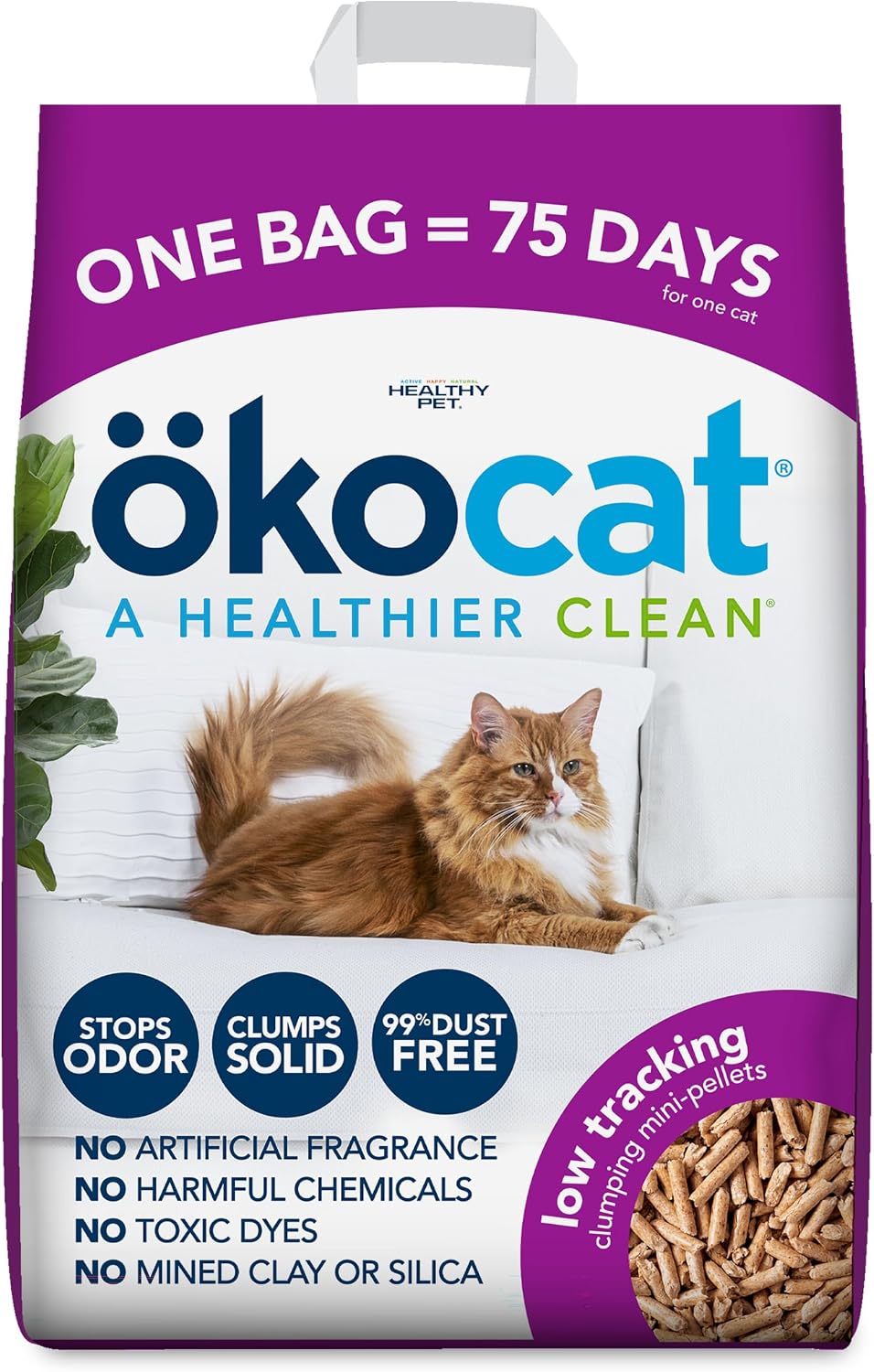
ökocat Less Mess Low Tracking Wood Clumping Cat Litter is a premium plant-based litter specifically engineered to keep both airborne dust and paw tracking to an absolute minimum. Made from sustainably sourced, precision-cut wood fiber, it delivers excellent clumping performance without the respiratory irritation of clay.
Key Highlights
- Wood-Based Formulation: Upcycled natural wood fibers absorb liquid on contact and naturally suppress ammonia odors without synthetic fragrances.
- Low-Tracking Mini-Pellets: Denser, compact pellet shape resists sticking to cat fur and paws, preventing litter from spreading onto rugs and bedding.
- 99% Dust-Free Pour: Screened to remove airborne micro-particles, dramatically reducing coughing and sneezing during pouring and scooping.
- 100% Unscented: Free of artificial perfumes, chemical dyes, and synthetic deodorizers that aggravate sensitive human airways and trigger feline asthma.
Pros
- Exceptionally low airborne dust compared to traditional bentonite clay.
- Mini-pellet texture drastically reduces tracking around the home.
- Natural wood enzymes control odors effectively without perfumes.
Cons
- Firm pellet texture may require a gradual 7-to-10-day transition for cats accustomed to soft clay.
Best Practices: Pouring, Scooping, and Box Placement
Even the lowest-dust litter can trigger respiratory symptoms if handled improperly. Implementing smart box maintenance protocols keeps environmental exposure to a minimum.
+--------------------------------------------------------------------------+
|                  ALLERGY-SAFE LITTER BOX SETUP PROTOCOL                  |
|                                                                          |
|  [Placement]        Hard flooring outside bedroom, near exhaust airflow  |
|  [Pouring]          Hold bag 2 inches above bottom; pour slowly          |
|  [Scooping]         Daily, smooth sifting motion; wear N95 mask if sensitive|
|  [Disposal]         Seal waste immediately in dedicated disposal pail    |
|  [Air Purification] Dedicated True HEPA unit positioned 4-6 feet away    |
+--------------------------------------------------------------------------+
1. The Low-Angle Pour Technique
Never dump fresh litter into a dry pan from chest or waist height. Dropping heavy granules through several feet of open air generates immediate turbulence, billowing fine dust throughout the room. Instead:
- Rest the bag or container directly on the rim of the pan.
- Keep the pour spout no more than 2 to 3 inches above the floor of the box.
- Tilt slowly, allowing the granules to slide smoothly into place without creating an updraft.
2. Gentle Sifting Habits
When scooping clumps, avoid vigorously shaking the plastic scoop against the side of the pan. Shaking fractures fragile clumps and launches dry particles into the breathing zone. Use a smooth, slow sifting motion, allowing clean litter to sift through the slots naturally before gently transferring waste into a disposal bag.
3. Assigning Scooping Duties
If you suffer from moderate to severe cat allergies or asthma, delegate daily box maintenance to a non-allergic family member whenever possible. If you must scoop yourself:
- Wear a well-fitted N95 particulate respirator during box cleaning.
- Wear disposable gloves to avoid direct dermal contact with dried urinary proteins.
- Wash your hands and wrists thoroughly with warm water and soap immediately afterward.
4. Strategic Box Placement and Ventilation
Where you place the litter box profoundly affects household allergen distribution:
- Keep Out of Bedrooms: Never locate a litter box in or adjacent to the bedroom. As highlighted in our master guide on how to reduce cat allergens at home, the bedroom must remain a pristine sanctuary where your lungs can recover overnight.
- Choose Hard Flooring: Place boxes on tile, linoleum, or sealed wood flooring rather than carpet. Carpeting traps scattered litter dust and dried dander that vacuuming struggles to extract.
- Support with HEPA Air Purification: Running a dedicated air purifier near the litter station actively scrubs airborne dust and buoyant dander before it circulates throughout the house. Review our tested recommendations in our guide to the best air purifiers for cat allergies.
- Routine Vacuuming: Use a sealed vacuum equipped with a True HEPA exhaust filter to clean around the litter box area twice weekly. Standard vacuums without sealed HEPA systems blow fine dust back into the air. Compare top models in our best HEPA vacuum for pet hair review.
How to Safely Transition to a New Litter
Abruptly swapping your cat's familiar litter can cause behavioral distress and litter box aversion. Cats develop strong preferences for substrate texture, smell, and paw feel early in life. If a sudden change upsets your cat, they may begin eliminating on carpets, laundry piles, or soft bedding.
Follow this gradual 10-day transition schedule to switch substrates safely:
Days 1–3:   75% Old Litter  +  25% New Low-Dust Litter
Days 4–6:   50% Old Litter  +  50% New Low-Dust Litter
Days 7–9:   25% Old Litter  +  75% New Low-Dust Litter
Day 10+:    100% New Low-Dust Litter
- Monitor Output: Watch your cat closely to ensure they continue urinating and defecating normally. Straining, crying in the box, or frequent unsuccessful visits warrant an immediate veterinary consultation to rule out feline lower urinary tract disease (FLUTD).
- Consult Your Veterinarian: If your cat has pre-existing feline asthma or a history of urinary blockage, consult your veterinarian before making any changes. Respiratory-compromised felines benefit immensely from paper or low-dust wood pellets, but medical guidance ensures the transition supports their overall health.
Key Takeaways
- Dust Management Over Brand Loyalty: Low-dust claims vary widely by batch and brand; personal pouring technique and gentle scooping habits matter just as much as the product you choose.
- Choose Unscented Exclusively: Scented litters contain synthetic fragrances that provoke coughing, bronchial irritation, and allergic rhinitis in sensitive airways.
- Evaluate Substrates Realistically: High-grade, multi-screened clumping clay offers familiar paw texture with low dust, while recycled paper pellets and compressed wood provide the absolute lowest airborne dust at the expense of clumping convenience.
- Isolate the Litter Area: Position the box far away from bedrooms on hard flooring, and support the room with a dedicated True HEPA air purifier to capture buoyant particulates.
- Transition Gradually: Never replace a litter substrate overnight. A gradual 7-to-10-day blend prevents feline stress and bathroom accidents.
Sources
- Bonnet, B., et al. (2018). "An update on molecular cat allergens: Fel d 1 and beyond." Allergy, Asthma & Clinical Immunology, 14, 7.
- American Academy of Allergy, Asthma & Immunology (AAAAI). "Indoor Allergens, Environmental Controls, and Asthma Triggers."
- American College of Allergy, Asthma & Immunology (ACAAI). "Pet Allergies: Causes, Symptoms, and Management."
- American Association of Feline Practitioners (AAFP). "Feline Environmental Needs Guidelines and Litter Box Management."