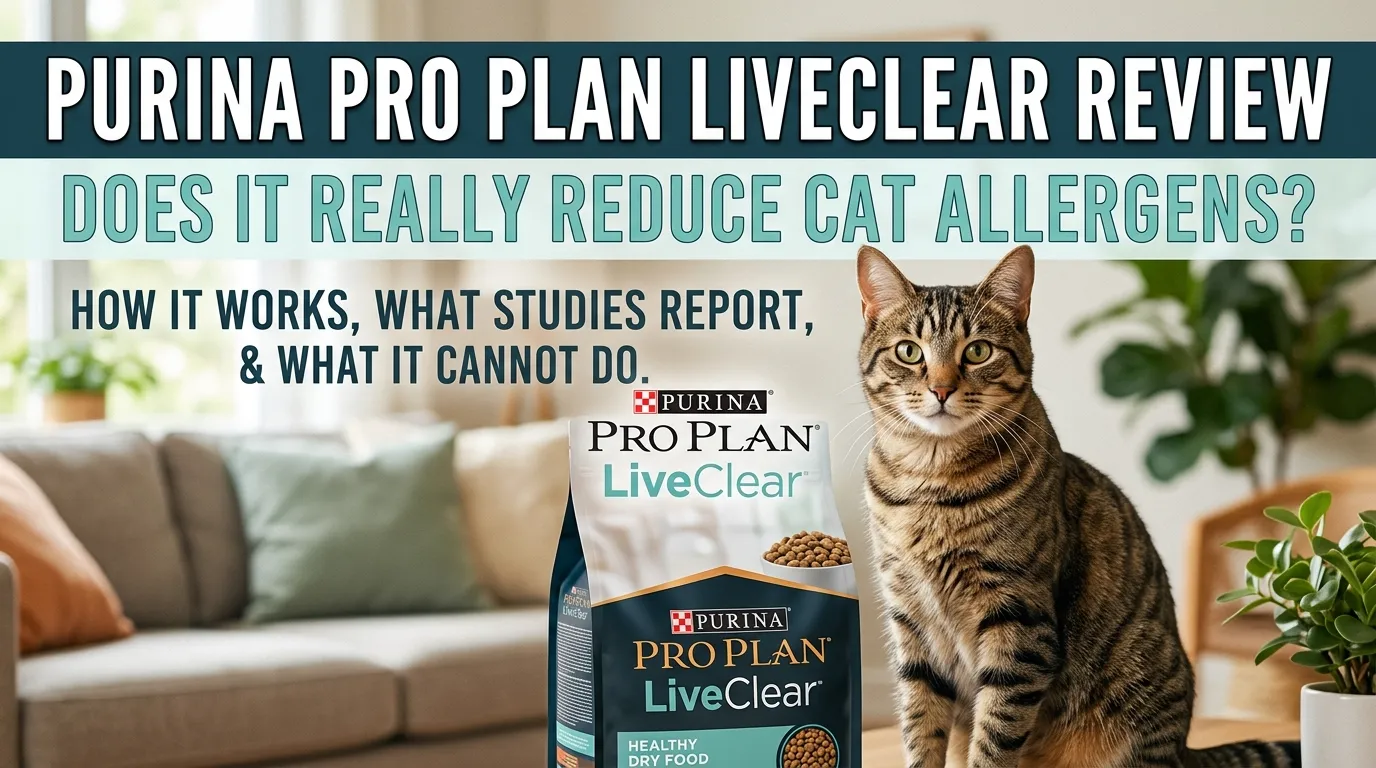
Purina Pro Plan LiveClear Review: Does It Really Reduce Cat Allergens?
LiveClear is a cat food designed to reduce active Fel d 1. Here is how it works, what studies report, and what it cannot do.
If you are reading this purina pro plan liveclear review to see whether it really reduces cat allergens, the direct answer is that it is scientifically formulated to neutralize active Fel d 1 in feline saliva, lowering active allergen levels on hair and dander by an average of 47% starting in the third week of daily feeding. However, the foundational research was conducted primarily by manufacturer-affiliated scientists, independent peer-reviewed replication remains limited, and real-world symptom relief varies widely from person to person.
Living with cat allergies usually means taking daily antihistamines, setting up air purifiers, and constantly vacuuming dander. The idea that simply changing what your cat eats could reduce your sneezing and itchy eyes sounds almost too good to be true. Yet Purina Pro Plan LiveClear represents one of the most innovative approaches to feline allergen management developed over the last two decades.
In this comprehensive, evidence-based review, we examine the molecular science behind LiveClear, analyze what the published clinical trials actually prove, outline what the food cannot do, explore available formula variants, and discuss how to safely trial it in your home.
How It Works: The Molecular Science of LiveClear
To understand how a cat food can influence human allergies, you must understand where cat allergens originate.
As explored in our medical guide on what causes cat allergies, up to 95% of human feline allergies are triggered by a 35 kDa secretoglobin glycoprotein called Fel d 1. Cats produce this protein naturally inside their salivary glands, sebaceous (skin) glands, and tears. During daily grooming, the cat spreads saliva across its coat. When the saliva dries, the active protein binds to microscopic shed skin cells (dander) measuring 2 to 10 microns, which then float into household air currents.
+--------------------------------------------------------------------------+
|                  HOW PURINA LIVECLEAR NEUTRALIZES FEL D 1                |
|                                                                          |
|  1. Chickens exposed to cats naturally produce anti-Fel d 1 antibodies.  |
|  2. These specific IgY antibodies concentrate naturally in egg yolks.    |
|  3. The egg ingredient is coated onto LiveClear kibble.                  |
|  4. As the cat chews, IgY binds to active Fel d 1 in feline saliva.      |
|  5. Salivary allergens are neutralized BEFORE spreading onto fur.        |
+--------------------------------------------------------------------------+
The Avian IgY Mechanism
The biological mechanism behind LiveClear relies on natural cross-species immunology:
- Natural Avian Response: Chickens exposed to standard feline environments naturally produce specialized antibodies—known as Immunoglobulin Y (IgY)—targeted specifically against feline Fel d 1.
- Yolk Concentration: These protective antibodies concentrate naturally in the egg yolks laid by these hens.
- Salivary Neutralization: Purina extracts this egg ingredient and coats it onto the outer layer of the dry kibble. When the cat chews the food, the IgY antibodies bind directly to the active conformational epitopes of Fel d 1 present in the cat's mouth.
- Harmless Digestion: Once swallowed, the egg protein is digested in the feline stomach just like any standard dietary protein. It does not enter the cat's bloodstream, alter its hormonal endocrine system, or change its baseline genetics.
By neutralizing the active allergen in the saliva before the cat grooms, the dander and hair shed into your home carry a significantly lower allergen payload.
What the Clinical Studies Actually Report
When evaluating LiveClear, it is vital to examine the published data with an objective, evidence-based mindset.
The primary clinical research supporting LiveClear was published by Satyaraj and colleagues (2019) in the peer-reviewed Journal of Feline Medicine and Surgery.
Key Study Findings
- Average 47% Reduction: Across a 10-week feeding trial involving over 100 domestic cats, feeding the IgY-supplemented diet resulted in an average 47% reduction in active Fel d 1 on feline hair and dander.
- Timeline of Efficacy: Statistically significant reductions in active allergen began by the third week of continuous daily feeding, with allergen levels stabilizing throughout the remainder of the study.
- Significant Response Rate: Approximately 86% of cats in the trial demonstrated a measurable decrease in active Fel d 1 levels, with half of the cats experiencing reductions of 50% or greater.
- Feline Safety: Routine veterinary evaluations, blood chemistry panels, and behavioral monitoring revealed no adverse health effects, confirming that neutralizing salivary Fel d 1 does not compromise the cat's overall health or immune function.
Important Scientific Caveats
While these findings are clinically impressive, consumers must recognize two essential caveats:
- Industry-Affiliated Research: The clinical studies were conducted and funded primarily by Purina's internal research division. While published in a reputable peer-reviewed veterinary journal, large-scale independent replications by third-party universities remain limited.
- Allergen Reduction vs. Symptom Eradication: A 47% reduction in active Fel d 1 does not mean a 47% reduction in human sneezing. Human immune thresholds are non-linear; an individual with severe allergic asthma may still react strongly to the remaining 53% of active protein circulating in the environment.
What LiveClear Cannot Do: Managing Realistic Expectations
While Purina LiveClear is a valuable tool, it is not a magic cure. Understanding its limitations prevents disappointment:
- It Does Not Change Cat Genetics or Stop Production: LiveClear does not genetically alter your cat or stop its body from producing Fel d 1. The cat continues synthesizing the protein daily; LiveClear simply neutralizes a portion of it in the mouth.
- It Does Not Eliminate Sebaceous Skin Output: While saliva is the primary vector during grooming, a cat's sebaceous skin glands also secrete Fel d 1 directly onto the skin. LiveClear primarily targets oral saliva, meaning skin-secreted allergens are less directly neutralized.
- It Does Not Neutralize Existing Home Allergens: Cat dander is exceptionally persistent, remaining active in carpets, mattresses, and HVAC ducts for up to 20 to 24 weeks (up to 6 months) after deposition. Feeding LiveClear today will not remove the dander that settled into your sofa last month.
- It Does Not Cure Human Allergies: LiveClear reduces environmental allergen density, but it does not change your immune system's underlying IgE hypersensitivity.
LiveClear Formula Lineup
Purina manufactures several tailored formulas within the LiveClear product line, ensuring that cats with specific life-stage or dietary requirements receive appropriate nutrition based on manufacturer specs and published ratings.
Purina Pro Plan LiveClear Kitten Chicken & Rice Formula
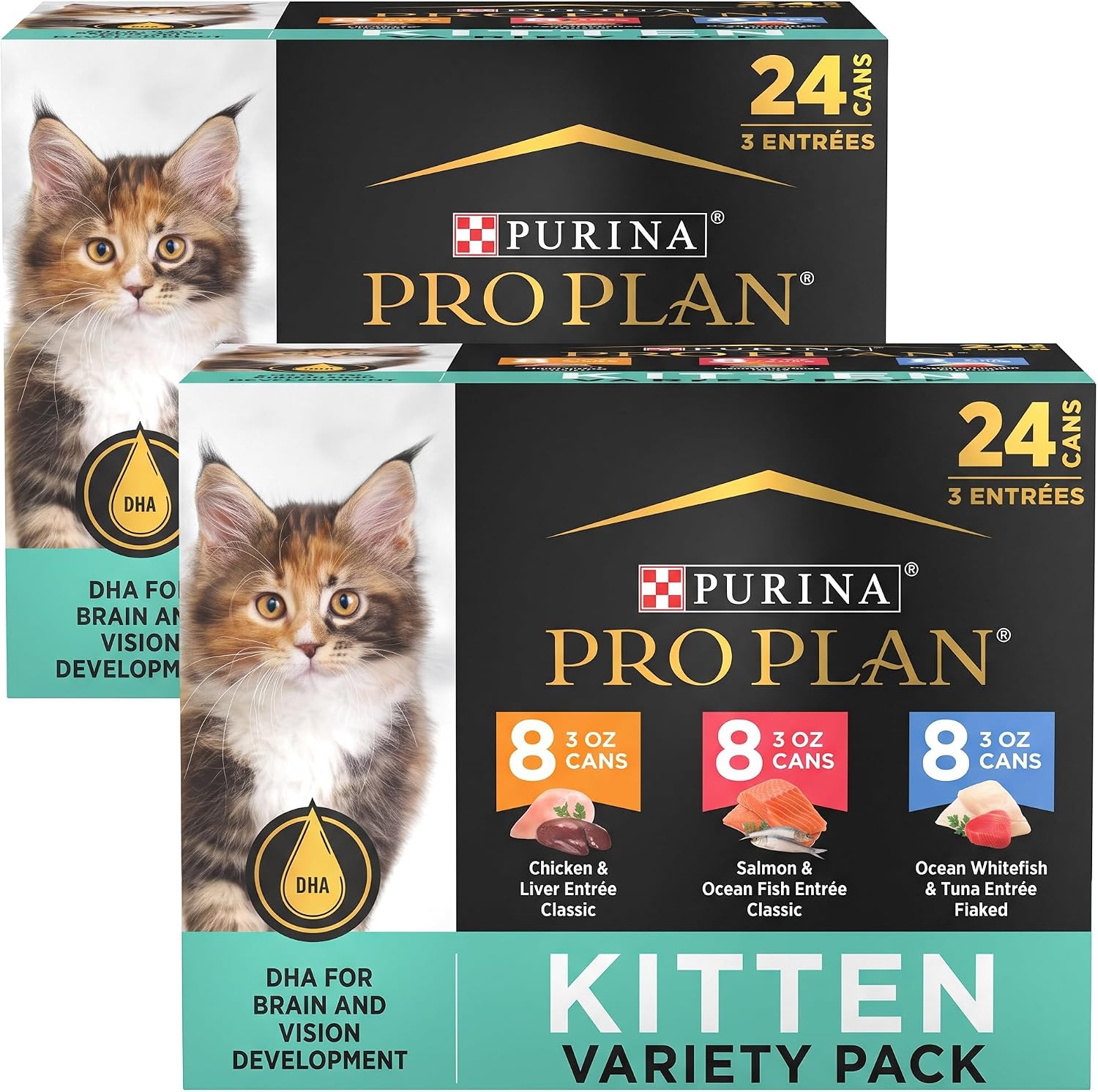
A kitten-specific LiveClear formula to consider for readers raising kittens. It incorporates the same egg-derived IgY protein technology to neutralize salivary Fel d 1 allergens while providing dense caloric and developmental nutrition tailored for growing cats under one year of age.
Key Highlights
- Allergen Neutralization at the Source: Formulated with egg-derived antibodies that bind to active Fel d 1 in kitten saliva, reducing allergen load on shed hair and dander.
- Brain & Vision Development: Fortified with DHA, an essential omega-3 fatty acid crucial for retinal and cognitive development in young cats.
- High-Protein Growth Nutrition: Features real chicken as the primary ingredient to fuel rapid muscle growth and lean body development.
- Digestive & Immune Support: Enriched with guaranteed live probiotics and antioxidants to support developing feline digestive and immune systems.
Pros
- Enables allergy households to manage dander exposure right from kittenhood.
- Meets complete and balanced AAFCO nutritional profiles for feline growth.
- Small, easily chewable kibble size tailored for kitten jaws.
Cons
- Requires 100% exclusive feeding to maintain anti-Fel d 1 salivary saturation.
Practical Feeding Guide: How to Transition Safely
To achieve the documented allergen reductions without causing gastrointestinal upset, you must follow strict feeding practices:
+--------------------------------------------------------------------------+
|                  10-DAY LIVECLEAR TRANSITION PROTOCOL                    |
|                                                                          |
|  Days 1–3:   75% Current Cat Food  +  25% Purina LiveClear               |
|  Days 4–6:   50% Current Cat Food  +  50% Purina LiveClear               |
|  Days 7–9:   25% Current Cat Food  +  75% Purina LiveClear               |
|  Day 10+:    100% Exclusive Purina LiveClear                             |
+--------------------------------------------------------------------------+
1. Maintain Strict Exclusivity
LiveClear works on a dose-dependent salivary binding principle. If you feed LiveClear in the morning but give your cat standard commercial canned food, table scraps, or non-LiveClear treats in the evening, you dilute the active IgY concentration in their saliva, significantly diminishing its neutralizing efficacy. To maximize results, LiveClear kibble should make up the vast majority of your cat's daily diet.
2. Transition Gradually
Abrupt dietary changes can trigger vomiting or diarrhea. Mix increasing amounts of LiveClear into your cat's existing food over a 7-to-10-day period.
3. Consult Your Veterinarian First
Always consult your veterinarian before switching diets, particularly if your cat has pre-existing medical conditions such as chronic kidney disease (CKD), feline lower urinary tract disease (FLUTD), or food allergies.
Alternative and Supportive Strategies
LiveClear is most powerful when combined with other evidence-based management tools. If your cat refuses dry kibble or has dietary restrictions preventing its use, explore these alternative and complementary strategies:
- Limited-Ingredient Cat Foods: While standard diets do not neutralize Fel d 1, high-quality foods rich in omega-3 and omega-6 fatty acids support skin barrier integrity, reducing excessive dry skin flaking. Compare options in our guide to the best cat food for allergies.
- Continuous True HEPA Air Filtration: While LiveClear lowers new allergen output, True HEPA air purifiers actively capture existing airborne dander particles down to 0.3 microns. Review our top tested models in our guide to the best air purifiers for cat allergies.
- Comprehensive Home Protocols: Combine dietary neutralization with pet-free bedrooms and high-heat laundry (130°F / 54°C or higher) as detailed in our guide on how to reduce cat allergens at home.
- Long-Term Living Strategies: For broader advice on cohabitating with felines, see our breakdown on can I keep my cat if I'm allergic.
Key Takeaways
- Scientifically Proven Mechanism: Purina LiveClear utilizes egg-derived anti-Fel d 1 IgY antibodies to neutralize salivary allergens in the cat's mouth during eating.
- Documented Clinical Efficacy: Published research demonstrates an average 47% reduction in active Fel d 1 on feline hair and dander beginning by the third week of continuous daily feeding.
- Requires Complete Exclusivity: Feeding non-LiveClear wet foods or treats dilutes salivary antibody levels and reduces allergen-neutralizing performance.
- Safe for Feline Physiology: The egg antibody is digested naturally in the stomach and does not alter the cat's internal biology, hormone levels, or immune system.
- A Supportive Tool, Not a Cure: LiveClear reduces environmental allergen density, but it does not cure human allergies or remove legacy dander already embedded in your home fabrics.
Sources
- Satyaraj, E., et al. (2019). "Anti-Fel d 1 immunoglobulins reduce active allergen in cat saliva and dander." Journal of Feline Medicine and Surgery, 21(10), 958–965.
- Satyaraj, E., et al. (2019). "Reduction of active Fel d 1 from cats using an antiFel d 1 egg IgY-containing diet." Immunity, Inflammation and Disease, 7(2), 68–73.
- Bonnet, B., et al. (2018). "An update on molecular cat allergens: Fel d 1 and beyond." Allergy, Asthma & Clinical Immunology, 14, 7.
- American Academy of Allergy, Asthma & Immunology (AAAAI). "Pet Allergies: Causes, Mechanisms, and Environmental Mitigation."