Cat Allergy vs. Dog Allergy: Differences, Symptoms, and What to Do
Cat and dog allergies look alike but involve different proteins. Compare symptoms, persistence, testing, and living with either pet.
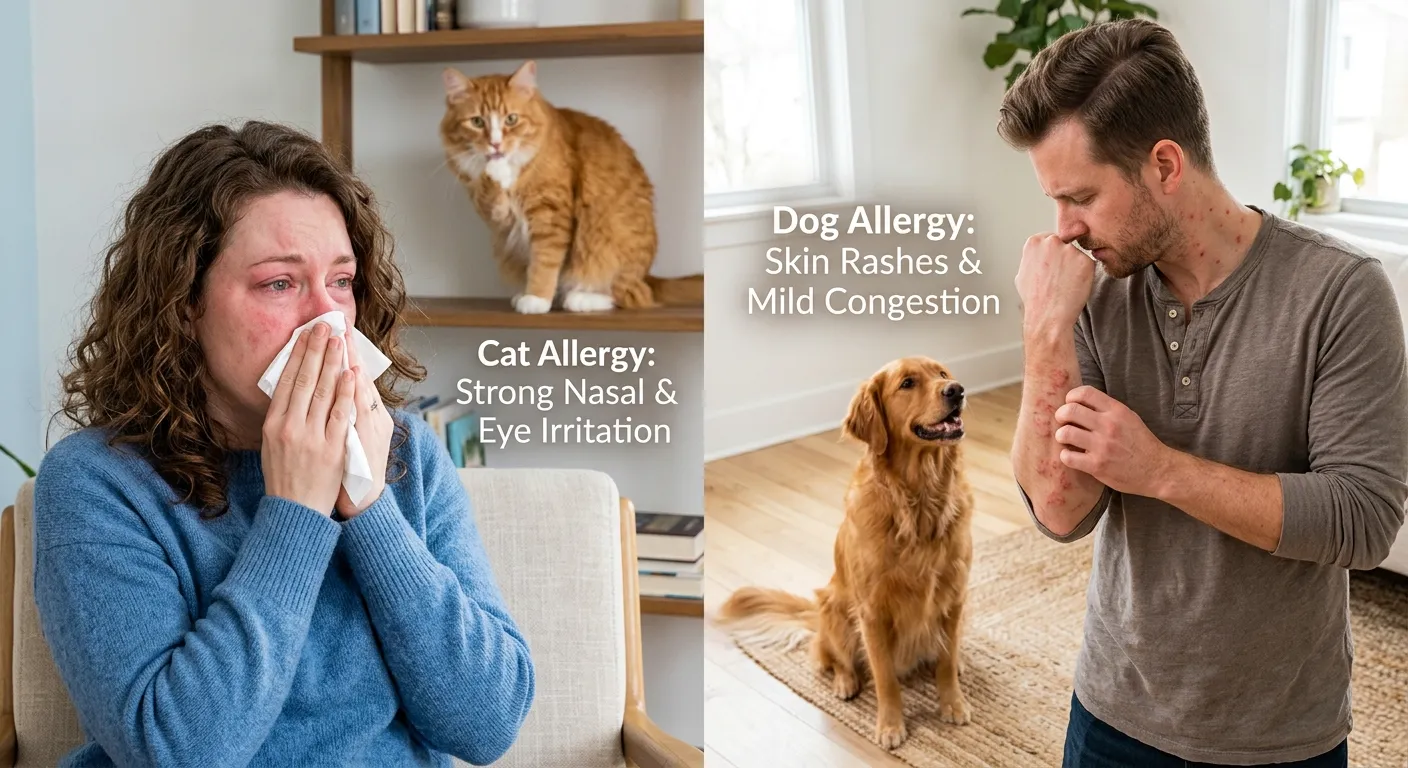
If you are comparing a cat allergy vs dog allergy, the short answer is that while both involve the same type of IgE-mediated immune reaction and share virtually identical symptoms, they are triggered by entirely different biological proteins. Furthermore, cat allergies are roughly twice as common as dog allergies, and feline allergens linger in the air and home environments far longer due to their smaller microscopic size and high surface stickiness.
Whether you are deciding which pet to adopt or trying to identify which animal is triggering your itchy eyes and sneezing fits, understanding the distinction between feline and canine allergies is essential. Many people assume that pet allergies are caused by "animal fur," leading to the misconception that low-shedding dogs or cats are completely allergen-free.
In this comprehensive guide, we compare the molecular proteins behind cat and dog allergies, analyze why cat allergies are more prevalent and persistent, examine symptom nuances, explain how clinical testing differentiates between them, and outline practical management strategies if you are sensitive to both.
The Primary Allergens: Fel d 1 vs. Canine Proteins
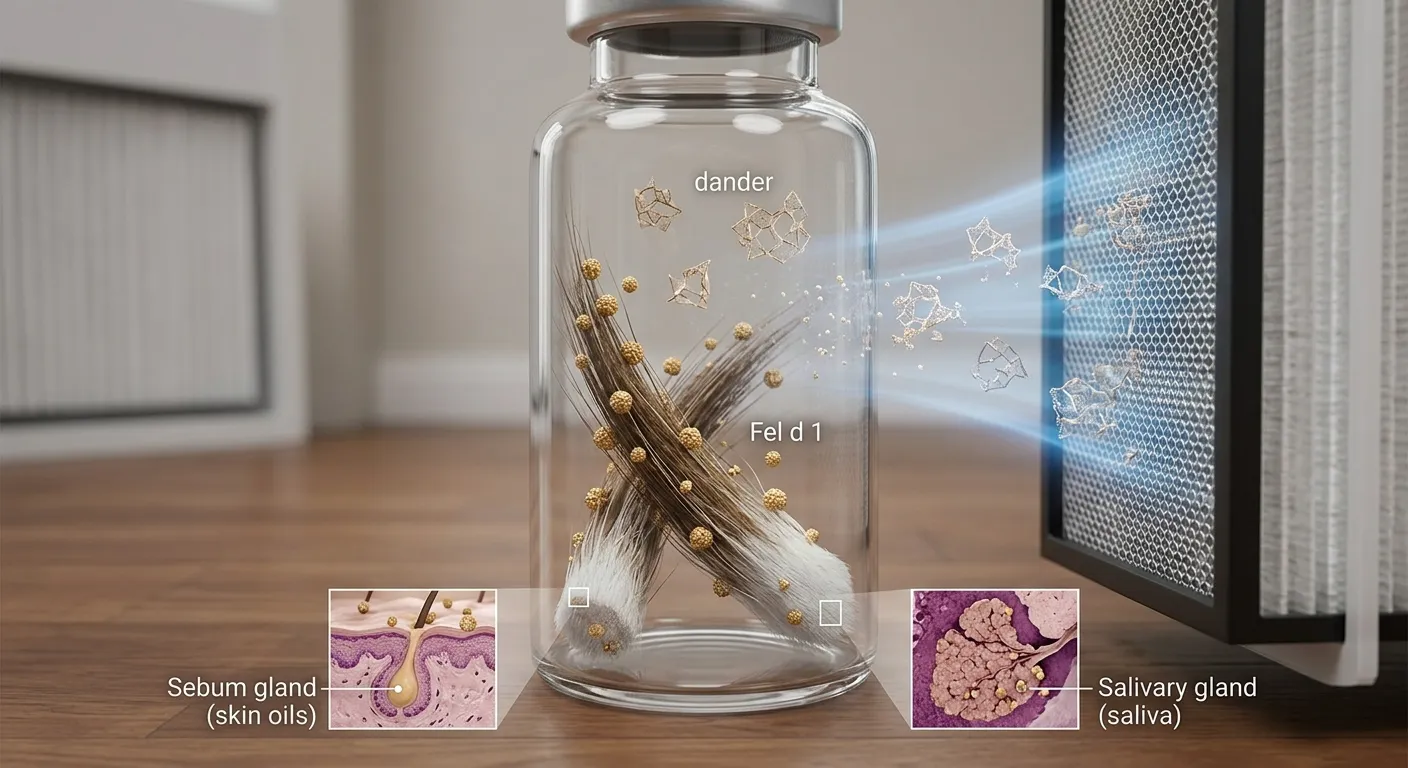
When your immune system reacts to a pet, it is not reacting to hair. Hair is made of inert keratin protein. Instead, your immune system mistakenly identifies specific microscopic secretory proteins as dangerous pathogens.
The Feline Allergen: Fel d 1
As detailed in our foundational guide on what causes cat allergies, feline allergies are dominated by a single primary protein:
- Fel d 1: A 35 kDa secretoglobin glycoprotein synthesized in feline salivary glands, sebaceous (skin) glands, and tears. Fel d 1 accounts for up to 95% of all human feline allergic responses.
- Secondary Feline Allergens: Minor secondary proteins include Fel d 2 (serum albumin), Fel d 4 (lipocalin), and Fel d 7.
Canine Allergens: A Diverse Protein Family
Unlike cats, where one protein causes the vast majority of human reactions, canine allergies involve a broader group of distinct proteins:
- Can f 1 and Can f 2: Lipocalins produced primarily in canine saliva, tongue glands, and hair follicles, driving 50% to 75% of human dog allergies.
- Can f 5: A prostatic kallikrein protein produced exclusively in the prostate glands of intact male dogs. Individuals sensitized specifically to Can f 5 often tolerate female dogs or neutered males without symptoms.
- Can f 3 (Albumin) and Can f 4: Secondary proteins that cross-react with other mammalian albumins.
Because cats and dogs produce distinct protein structures, being allergic to one pet does not automatically mean you will react to the other.
Prevalence: Why Are Cat Allergies Twice as Common?
Epidemiological reports from the American Academy of Allergy, Asthma & Immunology (AAAAI) and the American College of Allergy, Asthma & Immunology (ACAAI) show that cat allergies affect approximately 10% to 20% of the adult population worldwide. Cat allergies are approximately twice as common as canine allergies in human populations.
+--------------------------------------------------------------------------+
|                  ALLERGEN PREVALENCE & PERSISTENCE COMPARISON            |
|                                                                          |
|  [Human Population Prevalence]  Cats: 10%–20%   |   Dogs: 5%–10%         |
|  [Primary Allergen Vector]      Fel d 1         |   Can f 1, 2, & 5      |
|  [Particle Size Dynamics]       2–10 microns    |   Larger, heavier      |
|  [Airborne Suspension Time]     Hours to days   |   Settles much faster  |
|  [Vacated Home Persistence]     Up to 6 months  |   Significantly shorter|
+--------------------------------------------------------------------------+
Several immunological and physical factors explain this stark difference:
- Grooming Frequency: Cats spend up to 30% to 50% of their waking hours grooming. They continuously coat their entire body in saliva packed with Fel d 1, which crystallizes on skin dander and hairs.
- Particle Size and Buoyancy: Feline dander particles measure between 2 and 10 microns in diameter, with fine particles under 5 microns remaining airborne for hours. Canine dander particles tend to be larger and heavier, settling onto floors and furniture much faster.
- Immunogenicity of Fel d 1: The molecular structure of secretoglobins appears to provoke a stronger, more rapid IgE antibody response in human immune systems than the lipocalin family dominating dog dander.
Symptom Comparison: Cats vs. Dogs
Because both feline and canine allergens trigger the release of histamine, leukotrienes, and prostaglandins from sensitized mast cells, the resulting physical symptoms overlap heavily. However, subtle differences frequently appear in clinical practice:
| Symptom / Clinical Feature | Cat Allergy Profile | Dog Allergy Profile |
|---|---|---|
| Nasal Symptoms (Sneezing, Congestion) | Rapid onset; often severe within minutes of entering a cat home | Gradual onset; tends to build over hours of direct exposure |
| Ocular Symptoms (Itchy, Watery Eyes) | Common and acute; fine airborne particles easily contact eye conjunctiva | Common, but often requires direct hand-to-eye contact after petting |
| Asthma Flares & Bronchospasms | High risk; sub-5-micron particles penetrate deep into lower bronchioles | Moderate risk; typically less acute unless direct contact occurs |
| Skin Hives (Contact Urticaria) | Immediate raised welts upon contact with dried saliva or dander | Common from wet saliva licks, but less frequent from ambient room air |
| Cross-Reactivity Risks | Rare pork-cat syndrome (Fel d 2 albumin cross-reacting with pork meat) | Occasional beef or dairy cross-reactivity linked to serum albumin |
To review the full spectrum of physical reactions, explore our clinical guide to cat allergy symptoms.
Environmental Persistence: Why Cat Allergens Linger Longer
One of the most frustrating aspects of feline allergies is how long Fel d 1 survives in indoor spaces.
As explored in our analysis of how long cat allergy symptoms last, feline secretoglobins have an exceptionally sticky molecular structure. Microscopic flakes of dander cling tenaciously to smooth painted drywall, wooden baseboards, upholstery, and deep carpet pile.
- Up to 6 Months in Vacated Homes: Scientific studies show that residual Fel d 1 deposits in homes vacated by cats persist for 20 to 24 weeks (up to 6 months) before dropping to pet-free baselines, unless intensive deep cleaning and HEPA filtration are applied.
- Passive Public Transport: Because cat dander is so buoyant and sticky, detectable concentrations of Fel d 1 are routinely found in schools, movie theaters, buses, and office buildings, carried passively on the clothing of cat owners.
- Dog Allergen Decay: Canine dander settles much faster and is generally easier to remove with standard vacuuming and surface wiping, decaying to baseline levels significantly faster post-habitation.
The "Hypoallergenic" Myth: Neither Species Has a 100% Free Pass
Just as there is no 100% hypoallergenic cat breed, there is no 100% hypoallergenic dog breed.
Marketing campaigns often promote poodles, bichons, schnauzers, or doodles as allergy-free pets. However:
- All Dogs Produce Can f 1: Even hairless or non-shedding dogs produce allergenic proteins in their saliva, prostate glands, and skin cells.
- Shedding Does Not Equal Allergens: A non-shedding poodle still licks its coat and still sheds microscopic dander.
- Individual Variability: In both cats and dogs, allergen output varies wildly from animal to animal within the same breed.
Clinical Testing: How to Tell Which Pet Is the Culprit
If your household includes both cats and dogs, you cannot determine which pet is triggering your symptoms based on guesswork alone.
Step 1: Clinical Consultation with an Allergist
                            │
                            ▼
Step 2: Specific IgE Blood Test (ImmunoCAP) or Skin-Prick Test
                            │
                            ▼
Step 3: Component-Resolved Diagnostics (Differentiates Fel d 1 vs. Can f 1/5)
                            │
                            ▼
Step 4: Tailored Treatment Plan (Immunotherapy, environmental controls)
As detailed in our comprehensive guide to cat allergy testing, board-certified allergists use two gold-standard diagnostic tools:
- Skin-Prick Testing (SPT): Tiny droplets of purified feline and canine protein extracts are applied to your forearm and gently pricked into the epidermis. A raised, red hive (wheal) appearing within 15 minutes indicates IgE sensitization.
- Specific IgE Blood Testing: Measures the exact concentration of circulating antibodies against specific cat and dog proteins. Advanced component testing can even determine whether a dog allergy is driven solely by intact male proteins (Can f 5).
What to Do If You Are Allergic to Both Cats and Dogs
Living with both pets when sensitized requires a layered, proactive environmental defense:
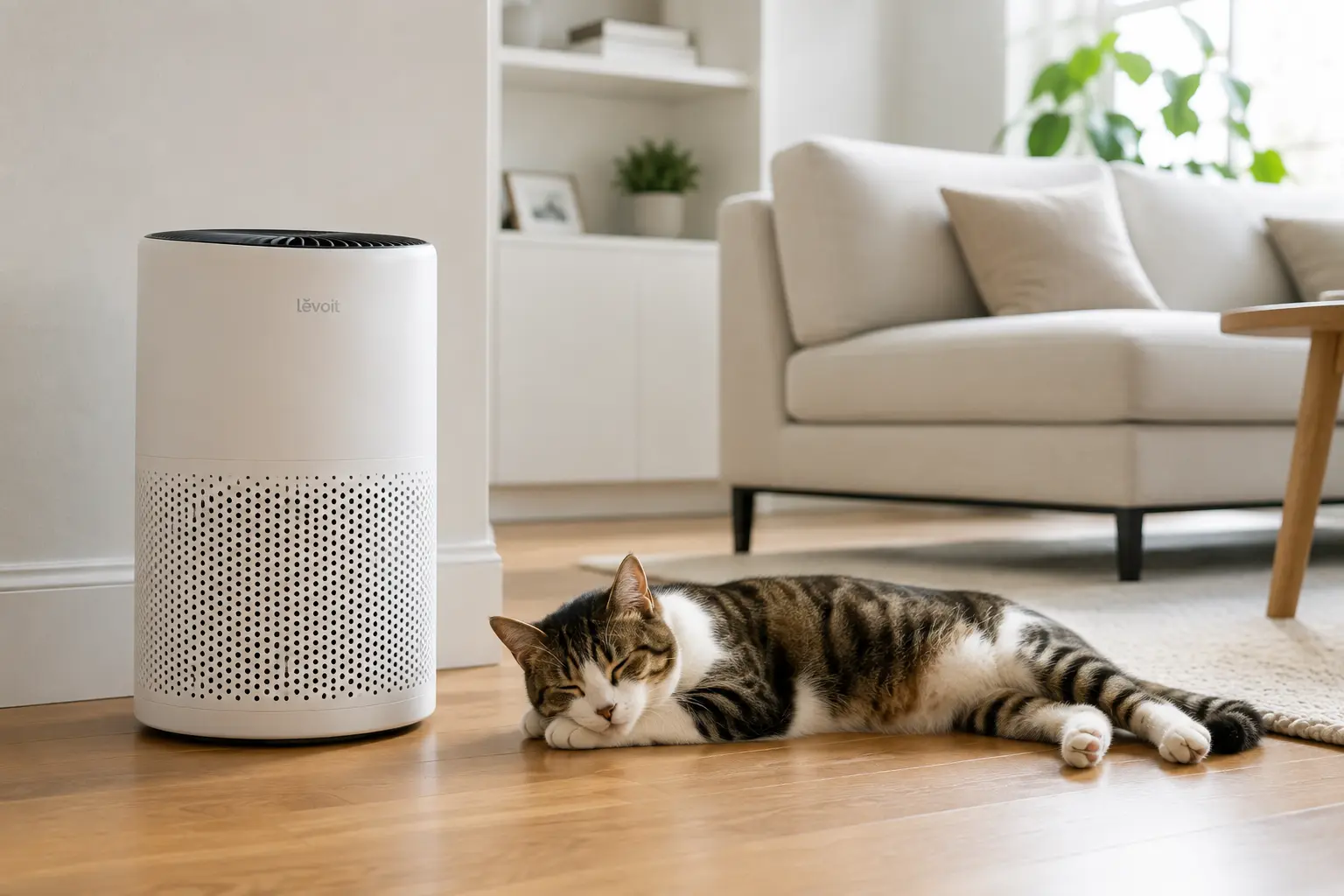
1. Continuous True HEPA Air Purification
Because both feline and canine dander become airborne, running True HEPA air purifiers in main living spaces and bedrooms captures 99.97% of particulates down to 0.3 microns.
2. Establish a Strict Pet-Free Bedroom
Keep the bedroom door closed 24 hours a day to prevent both pets from depositing dander on your bed. Wash bedding weekly in water heated to at least 130°F (54°C) to denature proteins.
3. Implement Comprehensive Home Protocols
Follow our complete blueprint on how to reduce cat allergens at home, and explore our guide on can I keep my cat if I'm allergic for balanced, realistic cohabitation advice.
Key Takeaways
- Different Proteins, Same Symptoms: Cat allergies are driven primarily by Fel d 1; dog allergies involve distinct proteins like Can f 1, Can f 2, and Can f 5.
- Cat Allergies Are Twice as Prevalent: Feline allergies affect roughly 10% to 20% of adults worldwide, nearly double the prevalence of dog allergies.
- Cat Dander Lingers Longer: Fel d 1 particles are smaller (2 to 10 microns), stay airborne for hours, and persist in vacated homes for up to 6 months.
- No Hypoallergenic Free Pass: No breed of cat or dog is 100% hypoallergenic; all produce allergenic proteins in saliva and skin.
- Get Tested Clinically: Skin-prick and specific IgE blood tests are the only reliable way to pinpoint which animal triggers your symptoms.
Sources
- Bonnet, B., et al. (2018). "An update on molecular cat allergens: Fel d 1 and beyond." Allergy, Asthma & Clinical Immunology, 14, 7.
- American Academy of Allergy, Asthma & Immunology (AAAAI). "Pet Allergens Overview, Epidemiology, and Avoidance."
- American College of Allergy, Asthma & Immunology (ACAAI). "Pet Allergy Symptoms, Diagnosis, and Management."
- Custovic, A., et al. (1998). "Distribution and aerodynamic characteristics of cat allergen Fel d 1 in homes." Journal of Allergy and Clinical Immunology, 102(4), 607–612.