Are Hairless Cats Hypoallergenic? Why No Fur Does Not Mean No Allergens
Hairless cats like the Sphynx still produce Fel d 1. Learn why no fur is not no allergens, and what care they need.
If you are wondering whether are hairless cats hypoallergenic, the direct answer is no: hairless cats are not allergen-free, and having no fur does not mean having no allergens. While hairless breeds like the Sphynx eliminate loose shed hair, they produce standard baseline amounts of Fel d 1—the primary protein that triggers human cat allergies—in their saliva, skin oils, and tears.
With their wrinkled skin, large satellite-dish ears, and striking extraterrestrial appearance, hairless cats have become the ultimate symbol of the "hypoallergenic pet" in popular culture. Prospective cat owners frequently assume that because there is no fur to vacuum, allergic reactions will magically disappear. Unfortunately, feline immunology operates on microscopic biochemistry rather than visible hair.
In this guide, we break down why hairless cats still trigger immune reactions, examine the mechanics of skin oil accumulation, explain why some owners report relief while others react more severely, detail their high-maintenance care routine, and help you determine whether a hairless breed fits your household.
Quick Summary: Hairless Cat Allergy Facts
| Trait | Hairless Cat Reality | Impact on Allergy Sufferers |
|---|---|---|
| Fel d 1 Production | Standard biological baseline | Protein is present in saliva and sebaceous glands; no genetic reduction |
| Airborne Fur Shedding | Zero | Eliminates airborne hair rafts carrying dried salivary proteins |
| Skin Sebum Accumulation | Very High | Natural oils accumulate directly on skin, creating concentrated contact allergens |
| Dander Production | Present | Microscopic dead skin cells still detach and enter household air |
| Grooming Demands | High (Bathing every 1–2 weeks) | Owner must actively wash away oily allergen buildup to prevent skin irritation |
| Allergy Suitability | Mixed (depends on allergy type) | Better for airborne hair sensitivity; worse for direct contact hives |
Where the Allergen Comes From: The Sebaceous Oil Buildup
To understand why hairlessness does not prevent allergies, you must understand where feline allergens originate.
As detailed in our foundation guide on what causes cat allergies, up to 95% of human reactions are driven by Fel d 1, a 35 kDa secretoglobin glycoprotein synthesized in feline sebaceous (skin) glands, salivary glands, and tears. Hair itself is inert keratin; it is merely the physical carrier.
+--------------------------------------------------------------------------+
|                  THE HAIRLESS CAT ALLERGEN PARADOX                       |
|                                                                          |
|  [Furry Cat]      Fur absorbs sebum; shedding spreads hair across rooms. |
|  [Hairless Cat]   No fur to absorb oil; sebum pools directly on skin.    |
|  [Direct Touch]   Petting transfers concentrated Fel d 1 straight to skin.|
|  [Airborne]       Microscopic dead skin cells (dander) still slough off. |
+--------------------------------------------------------------------------+
The Sebum Concentration Effect
In standard domestic cats, thousands of fine hairs absorb natural skin oils as they are secreted from the sebaceous glands.
In hairless breeds like the Sphynx or Donskoy, there is no coat to absorb this continuous flow of sebum. As a result:
- Oily Surface Residue: The skin develops an oily sheen that feels slightly tacky or suede-like to the touch.
- Salivary Deposition: Hairless cats groom themselves constantly. When a hairless cat licks its skin, salivary Fel d 1 mixes directly with concentrated sebaceous Fel d 1 on the bare dermis.
- Direct Contact Transfer: If you stroke a hairless cat or let it curl up on your lap, concentrated oily allergens transfer directly to your hands, arms, and clothing.
For a detailed head-to-head comparison between low-shedding curly coats and hairless breeds, explore our breakdown of the Devon Rex vs. Sphynx for allergies.
Why Some People Report Fewer Symptoms (and Others React Worse)
Allergy sufferers often receive conflicting advice regarding hairless cats. Some owners swear their Sphynx cured their allergies, while others report having an immediate asthma attack or breaking out in severe hives upon touching one. Both experiences are biologically real.
Why Some Experience Fewer Symptoms
For individuals whose allergies are triggered primarily by airborne loose hair, a hairless cat can provide noticeable relief. Because there is no fur drifting into HVAC vents, settling on curtains, or collecting under furniture, the mechanical spread of dried saliva is drastically reduced.
Why Others React More Severely
For individuals with cutaneous (skin-contact) sensitivity or severe allergic asthma:
- Higher Topical Potency: Touching a hairless cat delivers a much higher dose of concentrated Fel d 1 per square inch than touching a fluffy cat, where your fingers primarily make contact with dry outer guard hairs.
- Cutaneous Hives and Welts: When sensitive skin touches the oily surface of a hairless cat, mast cells in the dermis rapidly degranulate, causing immediate redness, intense itching, and localized hives (contact urticaria).
- Dander Is Still Airborne: Hairless cats still shed dead skin cells. As explained in our guide on cat dander vs. hair allergies, microscopic dander particles measure 2 to 10 microns in diameter, with fine particles under 5 microns floating freely in room air for hours.
The Care Burden: Bathing, Skin Health, and Environmental Needs
Adopting a hairless cat requires committing to a specialized, rigorous care routine. Far from being "low-maintenance," hairless cats demand more daily physical care than almost any furry breed.
1. Mandatory Routine Bathing
Because natural sebum pools on their skin, a hairless cat requires a bath or thorough sponge bath every 1 to 2 weeks.
- The Routine: Use a gentle, fragrance-free, veterinary-approved pet shampoo with warm water. Rinsing thoroughly is essential; leftover soap residue causes severe dermatitis.
- What Happens if You Skip Baths: If left unbathed, the oily sebum turns reddish-brown, creating an unpleasant odor, staining bed sheets and furniture, and leaving a thick layer of concentrated allergens wherever the cat sits.
2. Ear and Nail Bed Hygiene
Without ear hair to block debris, hairless cats produce heavy, dark earwax. Owners must gently clean their ears weekly with a vet-approved cleanser. Similarly, black waxy sebum accumulates in the nail beds and between the toes, requiring weekly wipe-downs to prevent fungal infections.
3. Thermal Protection and Sun Safety
Without an insulating coat, hairless cats lose body heat rapidly:
- Indoor Heating: They must be kept in warm indoor environments (ideally 70°F / 21°C or warmer) with access to heated cat beds and cozy fleece sweaters.
- Sunburn Risks: Direct sunlight through windows can cause severe sunburn and skin cancer. UV-blocking window film or carefully monitored sun exposure is mandatory.
Who Might Consider a Hairless Breed?
A hairless cat can be a wonderful companion, but only for the right household:
- Good Candidate: An allergy sufferer whose primary trigger is airborne shed fur, who does not experience severe contact hives from skin oils, and who is fully prepared to commit to weekly bath routines and ear cleaning.
- Poor Candidate: Anyone looking for a "hypoallergenic, zero-maintenance" pet, individuals with severe contact skin allergies, or households with cold, drafty rooms.
To evaluate how your specific sensitivity and living situation match different breeds, explore our master guide to the best hypoallergenic cat breeds.
Environmental Controls: Managing Hairless Cat Dander at Home
Even with a hairless breed, microscopic dander accumulates on furniture and floats in indoor air. Combining your cat with proactive environmental measures—detailed in our guide on how to reduce cat allergens at home—ensures lasting comfort:
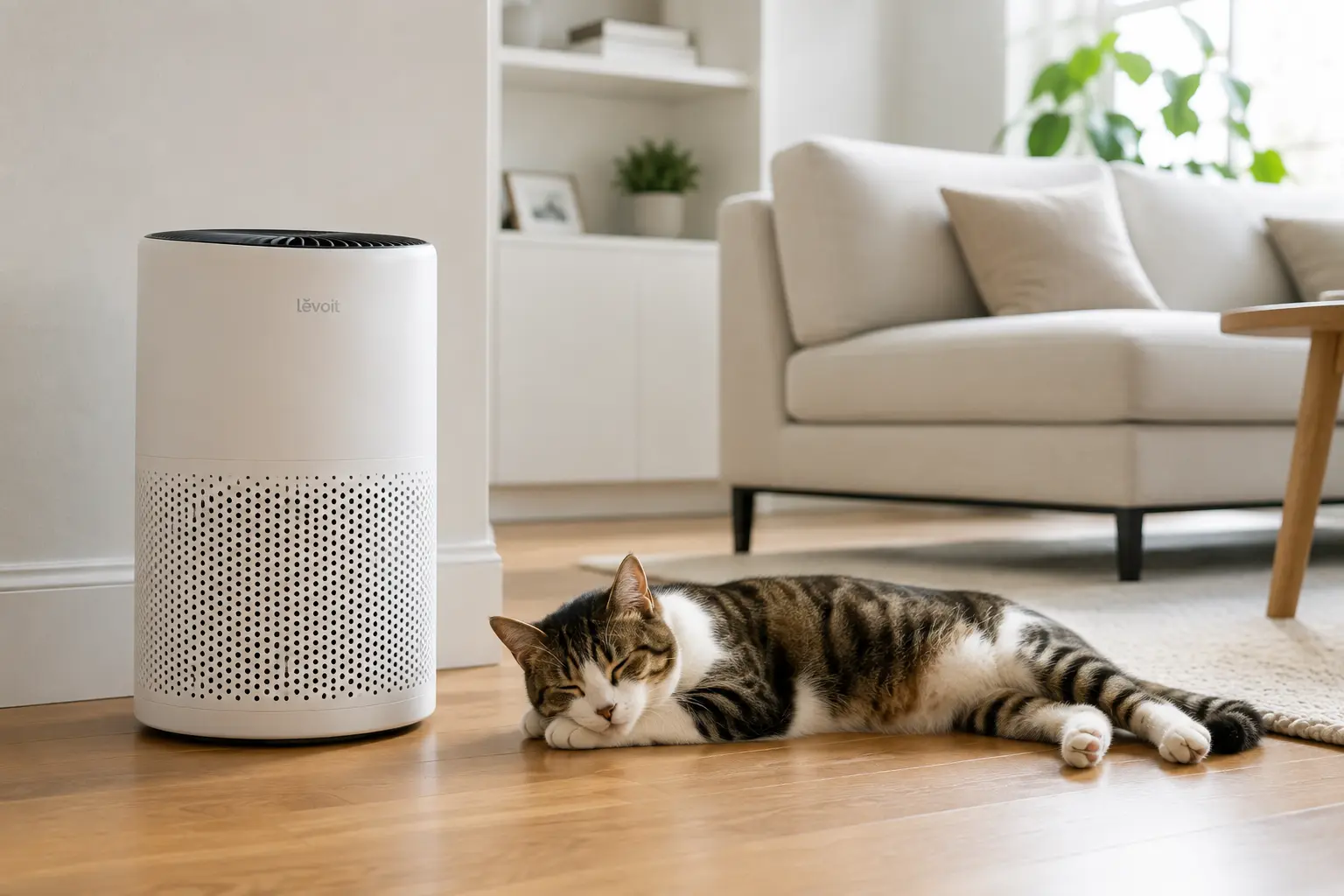
- Continuous True HEPA Air Filtration: True HEPA filters capture 99.97% of airborne particles down to 0.3 microns, continuously capturing buoyant dander flakes shed from bare skin.
- Designated Cat Blankets: Place washable cotton throws on your cat's favorite chairs and sofas to absorb body oils before they transfer to upholstery.
- High-Temperature Laundry: Wash pet blankets and bedding weekly in water heated to at least 130°F (54°C) to denature secretoglobin proteins and dissolve accumulated skin sebum.
Key Takeaways
- No Fur Does Not Mean No Allergens: Hairless cats produce standard levels of the primary Fel d 1 protein in their saliva, sebaceous glands, and tears.
- Concentrated Contact Allergens: Without fur to absorb body oils, sebum accumulates directly on the skin, transferring concentrated allergens straight to hands and clothing.
- Dead Skin Dander Still Sheds: Hairless cats continuously slough microscopic epithelial dander particles (2 to 10 microns) into household air.
- High Maintenance Demands: Hairless cats require routine bathing every 1 to 2 weeks, frequent ear cleaning, and protection from cold drafts and sunburn.
- Test Thoroughly Before Adopting: Spend hours interacting directly with adult hairless cats to ensure direct skin contact does not trigger severe cutaneous hives.
Sources
- Bonnet, B., et al. (2018). "An update on molecular cat allergens: Fel d 1 and beyond." Allergy, Asthma & Clinical Immunology, 14, 7.
- Cat Fanciers' Association (CFA). "Sphynx Breed Profile and Championship Standard."
- The International Cat Association (TICA). "Sphynx Breed Standard and History."
- American Academy of Allergy, Asthma & Immunology (AAAAI). "Pet Allergens: Exposure, Mechanisms, and Environmental Mitigation."